Introduction
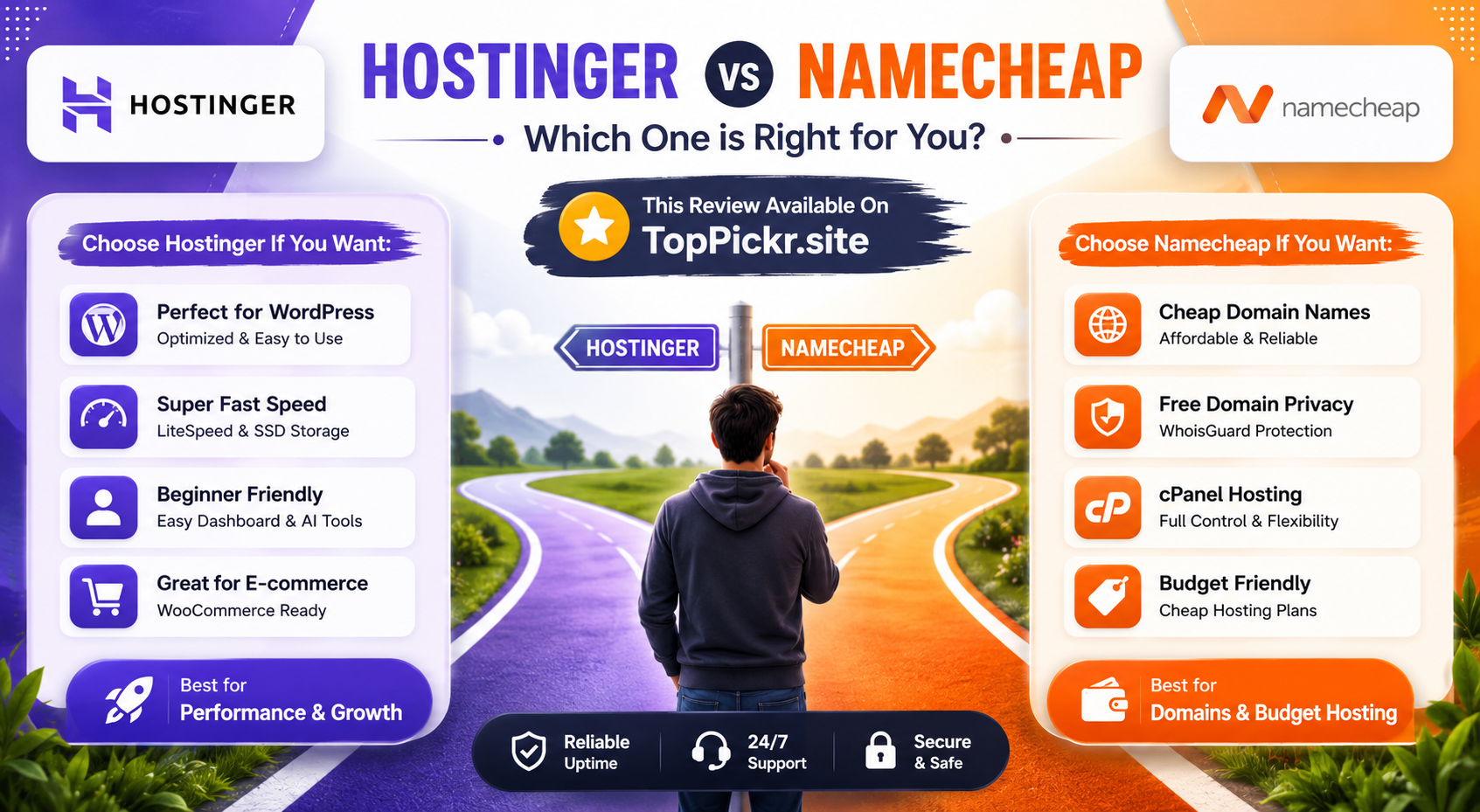
The truth is that when you compare Hostinger vs Namecheap, it can be confusing because both brands seem to be affordable, beginner-friendly, and popular. One is known for fast hosting, AI tools and a modern control panel. The latter is known for cheap domains, basic cPanel hosting, and solid privacy features. That’s why this in-depth Hostinger vs Namecheap hosting review is made for real users who want a clear answer before spending any money.
Let’s face it: no one wants server-speak that’s hard to understand. They want to know one simple thing, hostinger vs namecheap what is better for a blog, wordpress website, online store, small business website or domain purchase? You can read these reviews on TopPickr, and this guide is here to help you choose the right platform without wasting your time and money.
The bottom line is: Overall, Hostinger is the better choice for beginners looking for faster managed hosting, AI website tools, modern WordPress features, and easier setup. Overall, Namecheap is better for users who want cheap domain registration, cPanel hosting, simple shared hosting and good domain privacy. But the best option depends on your website goal, budget, traffic, and tech comfort.
What is Hostinger & Namecheap?
Here’s the simple explanation: Hostinger is a web hosting company built around affordable hosting, managed WordPress hosting, website building tools, cloud hosting, and beginner-friendly dashboards. It uses its own control panel called hPanel, which makes website setup easier for people who do not want to manage technical hosting settings manually.
Here’s another important point: Namecheap started as a domain registrar and later became a full hosting provider. It is still one of the most popular places to buy domains, manage DNS, protect WHOIS privacy, and host basic websites. Namecheap is also popular because many users already understand cPanel, and Namecheap shared hosting keeps that familiar experience.
Here’s the comparison in plain English: if your first priority is hosting performance and WordPress growth, Hostinger feels more modern. If your first priority is buying and managing domains cheaply, Namecheap feels more natural. This is why the question hostinger or namecheap for domain has a different answer than hostinger or namecheap for hosting.
Key Features Of Hostinger & Namecheap
So what’s good about Hostinger? Managed WordPress options, free SSL, website migration, backups, email options, website builder tools, AI tools, and great beginner guidance. Hostinger is ideal for users who want to get started fast without learning traditional server management.
Why you should consider Namecheap: Cheap domains, free domain privacy on most registrations, shared hosting, cPanel, Softaculous one-click WordPress install, email accounts, SSL options & familiar hosting tools. Namecheap is a great option for users who are already comfortable with cPanel or want to manage domains and hosting through a single account.
This is the difference: Hostinger is more on the guided hosting side, while Namecheap is more on the classic web hosting flexibility side. So if people are looking for hostinger vs namecheap for beginners, the answer is often Hostinger. When they look for hostinger or namecheap for domain, the answer usually goes towards Namecheap.
Prices & Plans – 2026
Most buyers fall into the trap of seeing the initial discount price and not the renewal price. A smart Hostinger vs Namecheap pricing comparison should cover the starting price, the renewal price, the limits of each plan, the features included, and the upgrade options.
How Hostinger usually positions its plans Hostinger usually advertises long-term discounts on its plans such as Premium, Business, and Cloud Startup. Premium is perfect for small starter websites. The Business plan offers more power, more websites, NVMe storage, daily backups, CDN features and better WordPress tools. The Cloud Startup plan is better suited for larger sites, online stores and businesses that expect higher traffic.
This is the usual way Namecheap displays its plans: Namecheap has three types of shared hosting: Stellar, Stellar Plus and Stellar Business. Good for small sites. Stellar Plus is for users who want more flexibility with their website. Stellar Business is for users who need more robust shared hosting resources and the stability that business users want.
The real lesson in pricing here is: Namecheap can be a little cheaper to start with, but Hostinger often gives you better WordPress tools and performance-focused features. Namecheap can appear to be cheaper for domain users and basic hosting users, but some users may need additional services based on what their website needs.
Hostinger vs Namecheap Renewal Price
Budget warning: Hostinger vs Namecheap renewal price is more important than the first year’s discount. Web hosts use promotional pricing as a way to attract new customers. Renewal pricing can be significantly more after the first term. Always check the checkout page, renewal terms, domain renewal price, email renewal price, SSL conditions and backup rules before you buy.
The best way to do this is: Choose Hostinger if you want to save time and grow your website faster with the whole package. Namecheap is the way to go for low cost entry, traditional control and cheaper domain management. Cheap hosting isn’t always the best hosting, but you don’t always need expensive hosting either.
Pros & Cons
Here’s a balanced view: both platforms have strengths and weaknesses. A serious namecheap vs hostinger pros and cons comparison should not blindly promote one brand.
Hostinger Pros
Here’s why many beginners like Hostinger: it has a clean dashboard, fast WordPress setup, AI-powered tools, free migration, free SSL, backups, CDN on selected plans, and a modern hosting experience. It also works well for users who want hostinger vs namecheap for wordpress because Hostinger’s managed WordPress tools feel easier for beginners.
Hostinger Cons
Here’s what you should know: Hostinger does not use classic cPanel by default on its main hosting plans. Some advanced users may prefer cPanel because they already know it. Also, the best discounts usually require longer commitments.
Namecheap Pros
Here’s why many people trust Namecheap: it is excellent for domain buying, DNS management, privacy protection, cPanel hosting, basic shared hosting, and low-cost starter websites. It is also a strong answer when someone asks is namecheap better than hostinger for domains.
Namecheap Cons
Here’s the drawback: Namecheap hosting can feel less modern than Hostinger for beginners who want guided WordPress setup, AI tools, and speed-focused managed hosting. It is good for affordable hosting, but not always the strongest choice for high-growth WordPress websites.
What You Get with a Paid Plan
After payment, this is what matters: a paid hosting plan should give you storage, bandwidth, SSL, backups, email, support, WordPress installation, domain connection, security tools and enough performance for your website traffic.
What you get with Hostinger: hosting space, SSL, WordPress tools, hPanel, website migration, email features, backups (depending on plan), AI tools, and performance features like CDN on higher plans. This makes it easier and faster to get set up for someone who’s just getting started.
With Namecheap you get cPanel hosting, domain connection, email accounts, WordPress installation via Softaculous, SSL support, backups depending on plan, and familiar shared hosting tools. Namecheap is easy and comfortable for a user who knows cPanel.
Ease of Use & User Experience
Here’s how the user experience differs: Hostinger feels more beginner-friendly and Namecheap feels more traditional. Hostinger’s hPanel has clean menus and guided actions.png Namecheap’s cPanel offers more traditional hosting controls, but newcomers may need some time to figure out every feature.
Best for new users. This one usually goes to Hostinger, as it reduces technical friction. The dashboard is modern-feeling and allows you to install WordPress, manage files, connect domains, create email, and check website tools.
The best option for users who already know about hosting is: namecheap vs hostinger for beginners may still favour Namecheap if the user has used cPanel before. cPanel is powerful, easy-to-use and flexible, especially for people that manage multiple small websites.
Getting Started
How to Get Started with Hostinger Select a plan Create an account Connect or claim a domain Install WordPress Select a template Enable SSL Set up email Publish your website Hostinger takes you through most of the steps so it’s less technical.
Get Started With Namecheap Once you have purchased a domain or hosting plan, you can log into your hosting dashboard and into cPanel. From there, you can install WordPress using Softaculous, connect your domain, enable SSL, create email accounts, and upload your website files as necessary.
The simple advice here is to pick Hostinger if you want fewer steps. If you want classic hosting tools and more direct control, go for Namecheap.
Interface Hositnger Vs Namecheap
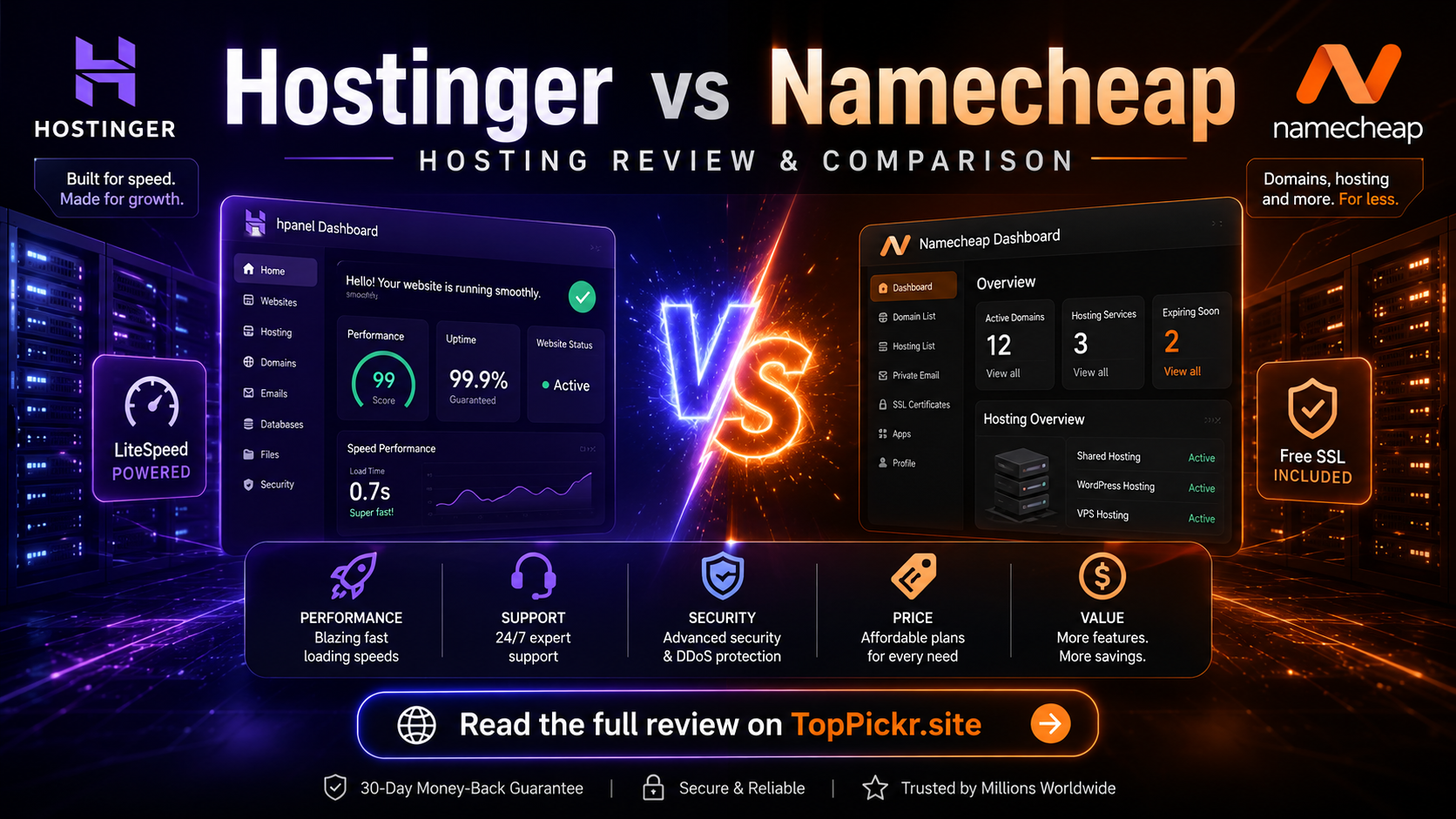
Here’s what the interface looks like: Hostinger uses hPanel and Namecheap cPanel for shared hosting. The phrase interface Hositnger Vs Namecheap comes up a lot because people are trying to figure out which dashboard is easier to use.
The advantage of Hostinger is its interface: hPanel is clean, modern and beginner friendly. Not too technical for beginners. Through simple sections, you can manage websites, domains, emails, backups, security and WordPress.
Namecheap interface plus: cPanel offers more traditional hosting control. It has file manager, databases, email tools, domains, backups, redirects, metrics and software installers. If you are experienced cPanel may feel more powerful.
Hostinger vs Namecheap cPanel Hosting
Here’s the important answer: hostinger vs namecheap cpanel hosting depends on your preference. Namecheap is better if you specifically want standard cPanel shared hosting. Hostinger is better if you want a simplified custom dashboard. Hostinger may offer cPanel hosting separately in some markets, but its main beginner hosting experience centers on hPanel.
Customer Support Comparison: Who’s Got Your Back?
Here’s why support matters: when your website breaks, slow support can cost sales, traffic, and trust. A useful namecheap vs hostinger customer support comparison should look at availability, support channels, knowledge base quality, and beginner guidance.
Here’s the summary: both companies offer 24/7 support resources, but the experience feels different. Hostinger focuses on guided help through hPanel, live chat, AI assistance, tutorials, and knowledge base content. Namecheap focuses on live chat, tickets, knowledge base articles, and cPanel-related support.
Namecheap Customer Support
Here’s what Namecheap users usually get: 24/7 live chat support, ticket support, a large help center, domain help, DNS help, hosting help, and cPanel guidance. Namecheap support is especially useful for domain issues because domains are one of its strongest areas.
Here’s the practical benefit: if you buy domains from Namecheap and host there too, you can manage domain records, hosting, email, and support from the same ecosystem. That makes Namecheap a good option for users who want simple domain hosting.
Hostinger Customer Support
Here’s what Hostinger users usually get: 24/7 support, tutorials, help center articles, guided dashboard support, and migration help. Hostinger is useful for beginners because the dashboard helps users solve many issues before they contact support.
Here’s the practical benefit: Hostinger feels better for users who do not know hosting terms. Its setup flow, tutorials, and WordPress tools reduce the need to ask support for every small step.
Hosting Features Comparison
Here’s where the decision becomes clearer: hosting features decide how fast, secure, and scalable your website can become. A strong hostinger vs namecheap shared hosting comparison must include storage, backups, SSL, WordPress tools, email, CDN, migration, performance, and control panel.
Here’s the simple feature verdict: Hostinger offers stronger beginner-focused hosting features, while Namecheap offers stronger traditional hosting control. Hostinger feels like a better all-in-one website launch platform. Namecheap feels like a better domain-first platform with reliable shared hosting.
Hostinger Features
Hostinger is unique for its managed WordPress hosting, hPanel, free SSL, automatic WordPress updates, website migration, AI website tools, website builder, backups depending on the plan, CDN depending on the selected plan, email features and global data center options.
Why This Matters: hostinger vs namecheap for wordpress is often a win for Hostinger, as beginners can get WordPress up and running faster. Hostinger is also good for hostinger or namecheap for wordpress site, as the WordPress tools are built into the user journey.
Here’s the ecommerce angle: hostinger vs namecheap for online store often depends on store size. Hostinger Business or Cloud plans are better for performance, AI site creation, WooCommerce features and easier scaling.
Namecheap Features
Namecheap excels in domain registration, domain privacy, cPanel, Softaculous, email accounts, shared hosting, SSL support, CDN options, DNS tools and affordable hosting plans.
Here’s why this matters: for domain buying and management as your primary goal, hostinger vs namecheap domain hosting will often lean towards Namecheap. Namecheap is a good choice for users who want to hostinger or namecheap for domain. Also, its domain dashboard is simple and privacy-focused.
Here is the wordpress perspective: namecheap vs hostinger for wordpress blog can be good for small blogs if the user is looking for low cost cpanel hosting. However, if the blogger wants managed WordPress tools and better beginner guidance, Hostinger might be the easier choice.
Website Performance Comparison: Which Platform is Faster?
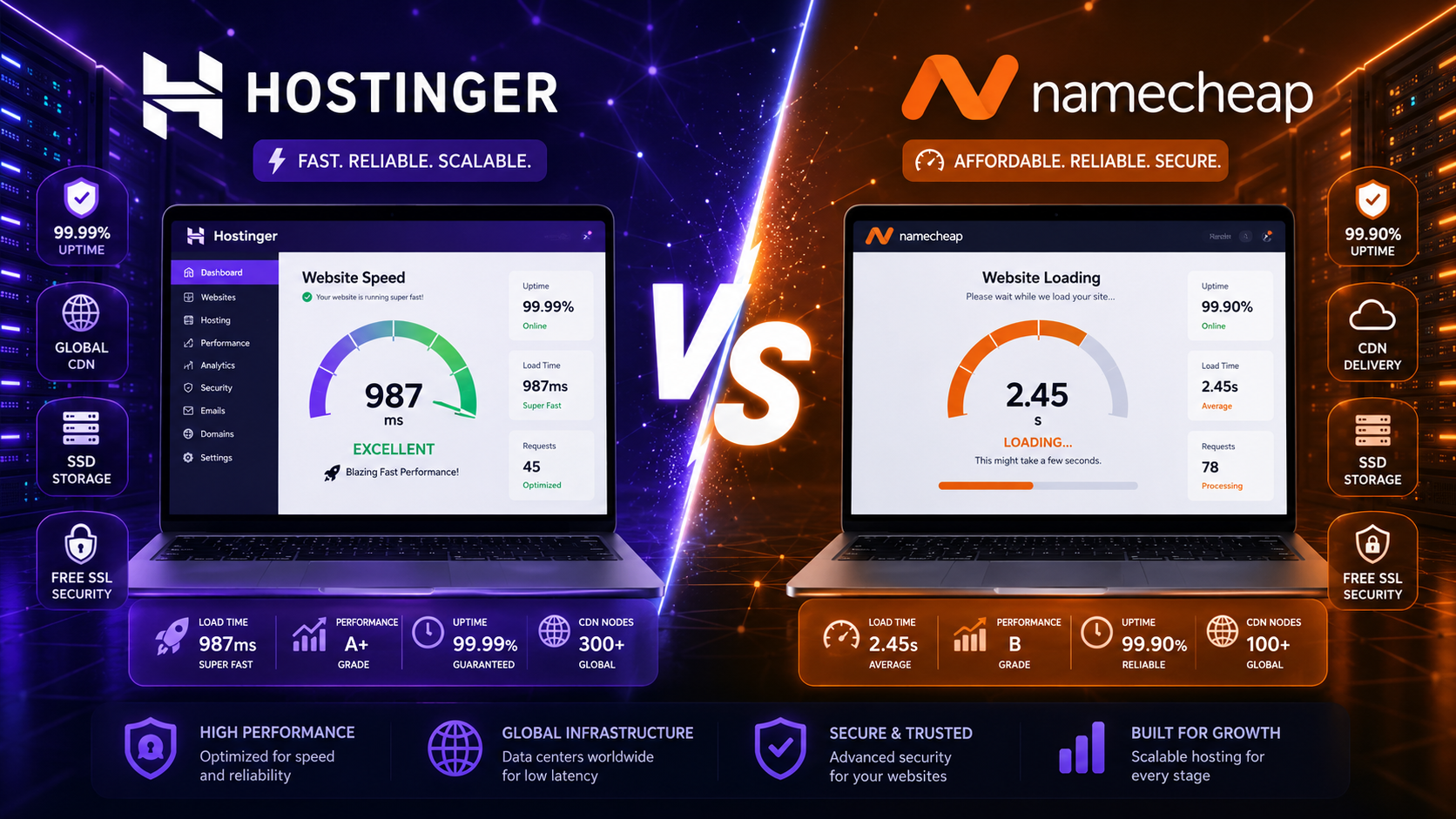
Here’s the big question: namecheap vs hostinger website speed can affect SEO, conversions, and user experience. A slow website can lose visitors before they read your content or buy your product.
Here’s the performance reality: Hostinger generally feels more performance-focused for WordPress because of its modern stack, NVMe storage on selected plans, CDN features, managed WordPress tools, and global data center options. Namecheap can perform well for small websites, especially when you choose a datacenter near your audience, but its shared hosting is more traditional.
Hostinger vs Namecheap Speed Test
Here’s the honest method: a fair hostinger vs namecheap speed test should use identical WordPress websites, the same theme, the same plugins, the same image sizes, the same caching setup, and similar server locations. You should test using tools like Google PageSpeed Insights, GTmetrix, WebPageTest, and Chrome UX Report data after the website has real traffic.
Here’s the likely result for most beginners: Hostinger is usually the better pick for performance-focused WordPress hosting. Namecheap is usually fine for small blogs, portfolios, and simple business websites, but Hostinger gives more room for growth.
Namecheap’s Performance Results
Here’s what Namecheap does well: it gives affordable shared hosting, cPanel control, SSD storage, and datacenter choices. For a small website, portfolio, or basic blog, this can be enough.
Here’s where Namecheap may feel limited: if your WordPress website uses heavy themes, many plugins, WooCommerce, large images, or high traffic, you may need stronger hosting. In that case, namecheap vs hostinger performance comparison often leans toward Hostinger.
Hostinger’s Performance Results
Here’s what Hostinger does well: it gives beginners a more optimized environment for WordPress, more modern storage options on selected plans, and easy tools for site speed improvements. This makes Hostinger a strong option for hostinger vs namecheap for small business because business websites need better loading speed and reliable uptime.
Here’s the practical verdict: is hostinger better than namecheap for hosting performance? For most WordPress beginners and small businesses, yes. Is Namecheap useless for hosting? No. It is still a good budget choice for simple websites.
Usability Comparison: Which Platform Is Easier to Navigate?
Here’s the usability answer: Hostinger is easier for beginners, while Namecheap is easier for users who already understand domain and cPanel hosting.
Here’s why Hostinger wins usability: it removes many technical steps from the process. You can follow dashboard prompts, use WordPress tools, and manage your website from a simplified panel.
Here’s why Namecheap remains useful: it gives you classic tools that advanced users understand. If you want cPanel, file manager, DNS control, email accounts, and Softaculous, Namecheap gives you that familiar structure.
Registration and Creating a New Account
Here’s what beginners should expect: both platforms make account creation easy. You choose a plan, enter your email, complete payment, and access your dashboard.
Here’s the main difference: Hostinger pushes you toward website creation and setup quickly. Namecheap pushes you toward domain and hosting management. That difference matters when deciding hostinger or namecheap which one to choose.
Namecheap
Here’s the Namecheap setup flow: you can search for a domain, add privacy protection, buy hosting, connect the domain to hosting, open cPanel, install WordPress, and start building.
Here’s who should choose it: Namecheap is good for users who want namecheap vs hostinger cheap hosting, domain privacy, and classic shared hosting. It is also good for developers and website owners who already understand cPanel.
Hostinger
Here’s the Hostinger setup flow: you choose a hosting plan, register or connect a domain, install WordPress, use AI tools if needed, enable SSL, pick a template, and publish your site.
Here’s who should choose it: Hostinger is good for users searching hostinger or namecheap for beginners 2026 because it gives a smoother setup process. It is also better for users who want hostinger or namecheap for blogging with less technical work.
Privacy and Security Comparison: Which Platform is More Secure?
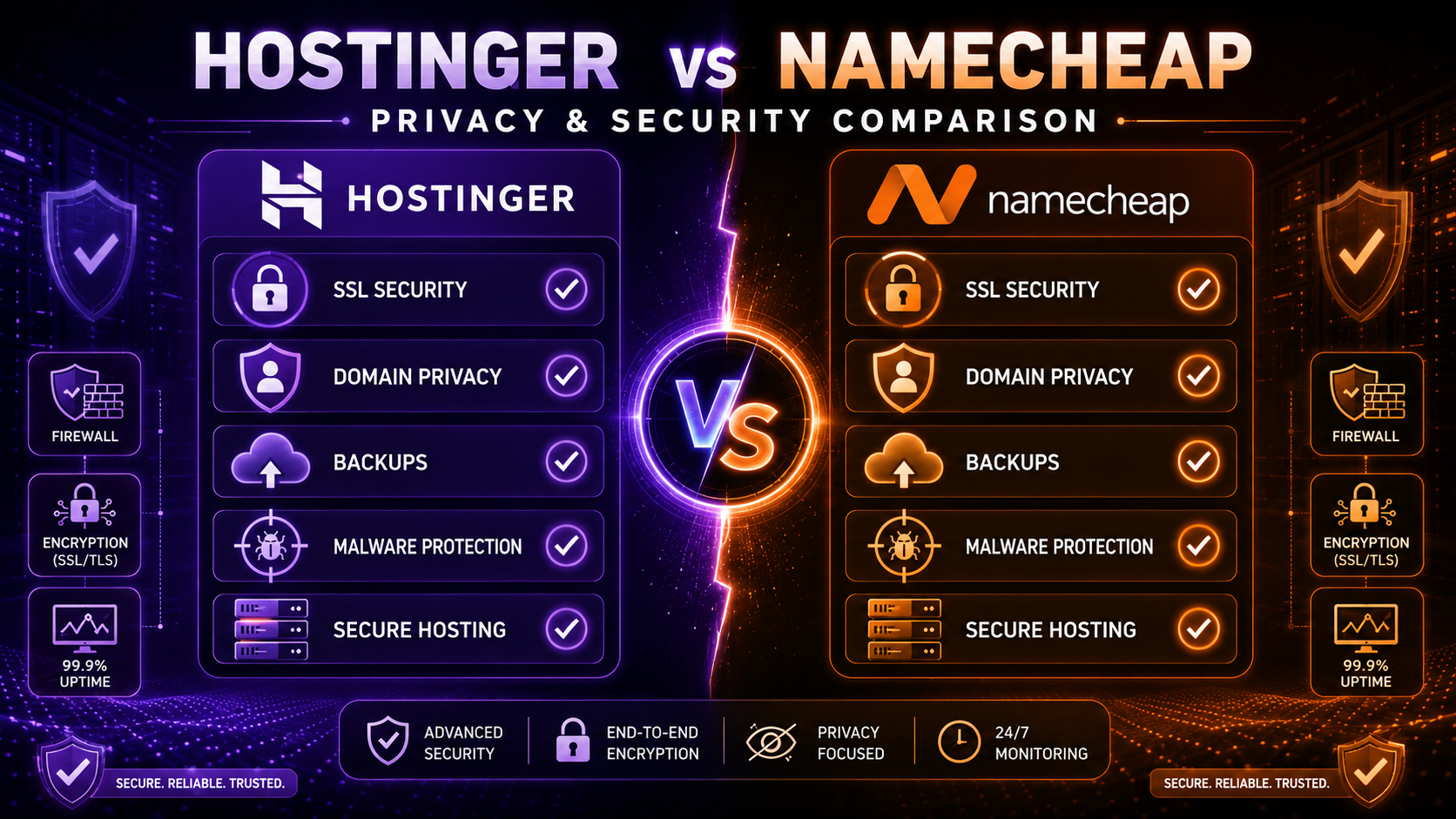
The security reality is this: both platforms give you some basic security tools, but they are covering different areas. Hostinger is all about hosting security, SSL, backups, malware protection options, and managed updates. Namecheap highly values domain privacy, SSL, account protection and security of cPanel-based hosting.
Here’s what you should do on either platform: Turn on SSL Use strong passwords Turn on 2-factor authentication Update your WordPress themes and plugins Install security plugins carefully Back up your site before making big changes
Hostinger Privacy and Security
Here’s Hostinger’s security value: Hostinger includes SSL, backup options, WordPress updates, migration support, and security features inside the hosting experience. This makes it easier for beginners to keep their website protected.
Here’s the best use case: choose Hostinger if you want security tools included in a modern hosting dashboard and you do not want to manually manage too many technical settings.
Namecheap Privacy and Security
Here’s Namecheap’s security value: Namecheap is especially strong for domain privacy. Its privacy tools help hide personal domain registration details from public WHOIS lookup where supported.
Here’s the best use case: choose Namecheap if domain privacy is your main concern. It is a strong answer when users ask is namecheap better than hostinger for domain ownership and privacy.
Server Locations Comparison
That’s why server location is important: the closer your server is to your audience, the faster your website tends to load. Server distance impacts latency, website speed, SEO experience, and conversion rates.
And here’s Hostinger’s advantage: Hostinger has a wider global server footprint, which allows users to target audiences in different areas. This can be useful for international websites, blogs, ecommerce stores and small business.
This is where Namecheap wins: Namecheap offers important datacenter options like US, UK, Europe, Singapore depending on plan and availability. It works well if your audience is close to these locations.
And the final word on the server: go with the platform that has the closest datacenter to your target audience. Hostinger wins out for global reach. Namecheap still does a decent job on simple domain hosting and regional shared hosting.
Namecheap vs Hostinger Hosting Plans
Here’s the plan-level comparison: Namecheap vs Hostinger hosting plans are aimed at slightly different users. Namecheap Stellar plans are good for users who want cheap shared hosting with cPanel. Hostinger’s Premium, Business, and Cloud plans are perfect for users who want to experience performance-focused hosting in a guided way.
Here’s the small business angle: If you want to host a business website that needs speed, WordPress growth and easier management, Hostinger is usually better than Namecheap. Namecheap still works for a basic business website with contact pages, service pages, and a small blog.
This is the ecommerce angle: namecheap vs hostinger for ecommerce website usually favours hostinger because online stores need speed, backups, SSL, scalability, and smoother WordPress or WooCommerce setup. You can use Namecheap for a small store, but growing stores may need more power.
Hostinger vs Namecheap WordPress Hosting
WordPress verdict: hostinger vs namecheap wordpress hosting For beginners and growth-oriented websites, Hostinger generally wins. Hostinger’s WordPress tools, AI setup, performance features, and managed experience make it easier to launch and manage WordPress.
Here’s what they say in the Namecheap WordPress verdict: If you are a WordPress user who likes cPanel, Softaculous and budget hosting, Namecheap can still be a good choice. namecheap vs hostinger for wordpress blog can be close for a simple blog. If you are looking for a serious business blog, affiliate website or ecommerce store, Hostinger is a better option.
Hostinger or Namecheap for Blogging
Here’s the blogging answer: hostinger or namecheap for blogging depends on your goals. If you want a hobby blog with low cost, Namecheap can be enough. If you want an SEO blog, affiliate blog, content website, or business blog, Hostinger gives better growth tools.
Here’s the SEO angle: faster hosting can improve user experience, reduce bounce rate, and support better Core Web Vitals. Hosting alone will not rank your website, but bad hosting can hurt performance. That is why many bloggers prefer Hostinger for long-term growth.
For more AI website growth ideas, read this TopPickr guide:
https://toppickr.site/hostinger-horizons-is-this-ai-tool-better-for-you/
Hostinger or Namecheap for Online Store
Here’s the online store answer: hostinger or namecheap for online store usually favors Hostinger. Ecommerce websites need stronger performance, better backups, easy SSL, reliable uptime, and smooth WordPress or WooCommerce handling.
Here’s where Namecheap fits: Namecheap can work for testing a small store idea or launching a lightweight store. However, as products, traffic, plugins, and checkout activity grow, Hostinger’s higher plans become more attractive.
For AI coding and website building comparisons, read this TopPickr guide:
https://toppickr.site/cursor-ai-vs-replit/
Final Verdicts
Here’s the bottom line: Best for: Beginners , WordPress , Small business websites , Ecommerce growth , Speed-focused hosting , Users who want a modern dashboard Namecheap wins for domain registration, domain privacy, low-cost entry, cPanel hosting, and those who like old-school hosting tools.
If you want hostinger or namecheap for hosting, hostinger or namecheap for wordpress site, hostinger or namecheap for business website, hostinger vs namecheap for wordpress then choose Hostinger. Go with Namecheap if you want hostinger or namecheap for domain, cheaper domain management or classic cPanel hosting.
The winner in practice: Hostinger is the better all-round hosting choice for most beginners in 2026. Namecheap is still one of the best options for domain-first users. So, Namecheap vs Hostinger which one is better? Hostinger 7. Best for Hosting Growth For domains and budget cPanel hosting, Namecheap is the better choice.
Final buying advice: Don’t pay too much attention to the first year discount. Renewal price Storage Backups CDN Email limits Support WordPress features Server location Match those details to the website goal and the right choice is obvious.
For more AI and software reviews, read this TopPickr article:
https://toppickr.site/claude-ai-review-better-than-chatgpt-in-2026/